
Drinking Myrrh
Summery Fernet cocktails for Myrrh-bearers

A note about celebrating with “spirits” of the liquid variety. I learned a prayer to say before cocktail hour from Dr. Michael Foley, and I checked with my priest this week to make sure it was all right to share in an Orthodox context. He said it seems perfectly fine to him:
“Stay with us, Lord, for it is getting toward evening, and bless our drinks and our conversation. Amen.”
But he also suggested this prayer from the small book of needs for blessing any and everything, and in this case, for your saintly cocktail hour:
“O Creator and Author of the human race; Giver of all spiritual Graces, Bestower of eternal Salvation: do thou, the same Lord, send down thy Holy Spirit with a blessing from on high upon this [our drink and our conversation], that, fortified by the might of Your heavenly protection, they may be potent unto bodily salvation and help and aid unto all who shall partake of it; through Jesus Christ our Lord, Who together with thou, the Eternal Father, and thy All Holy, Good and Life‑giving Spirit, we send up praise unto thee, unto ages of ages, Amen.”
Today is the Feast of Saints Mary and Martha of Bethany, sisters of Lazarus and myrrh-bearers.
Myrrh (from the Semitic root mrr, Hebrew mor, and Arabic murr, meaning bitter) probably isn’t an ingredient we think much about today, but it is still used in tinctures, soaps, perfumes, ointments—and amari. An amaro (Italian for bitter) is an herbal, bitter liqueur, of which there are dozens produced all over Europe. Some are sweet, and some, like most fernets, are more on the bitter side.
To be clear, a fernet is a kind of a subcategory of amaro. The recipe of an amaro usually reflects, at least in part, the terroir and locally grown herbs and plants of the region where it is made. Amaros are even being made in the US—I’ve been dying to try this Appalachian Fernet, for example, which really reflects the localist, peasanty origins of some of the spirits we now look at as high-end liqueurs. But originally, these were really medicinal products, especially to aid in digestion, which is why they were often drunk as aperitifs but especially digestifs.
The recipes for most of these beverages are murky, sometimes closely guarded secrets. Many arise out of alchemical traditions, and attempts to create cures for various ailments. But one of the defining ingredients of a fernet, most of the time, is myrrh, precisely because it is *so* bitter, so medicinal. The contradiction of myrrh as a sweet-smelling but bitter-tasting substance has some rather obvious religious symbolism. It’s also suggested as a medicinal treatment for everything from indigestion to every sort of ache and pain.
Myrrh is all over the Old and New Testaments, and the Gospel of Mark says that the wine offered to Jesus at His crucifixion was mixed with myrrh.
So, in honor of our myrrh-bearers today, we’re drinking Fernet Branca, which features myrrh as an ingredient. Originally marketed as a treatment for cholera, and modern favorite of hipster bartenders, Fernet is most popular in Argentina, which apparently consumes 75% of the global production. Why? Mainly because of the popularity of fernet con coca, the unofficial national drink of Argentina: Fernet Branca and Coca-Cola.
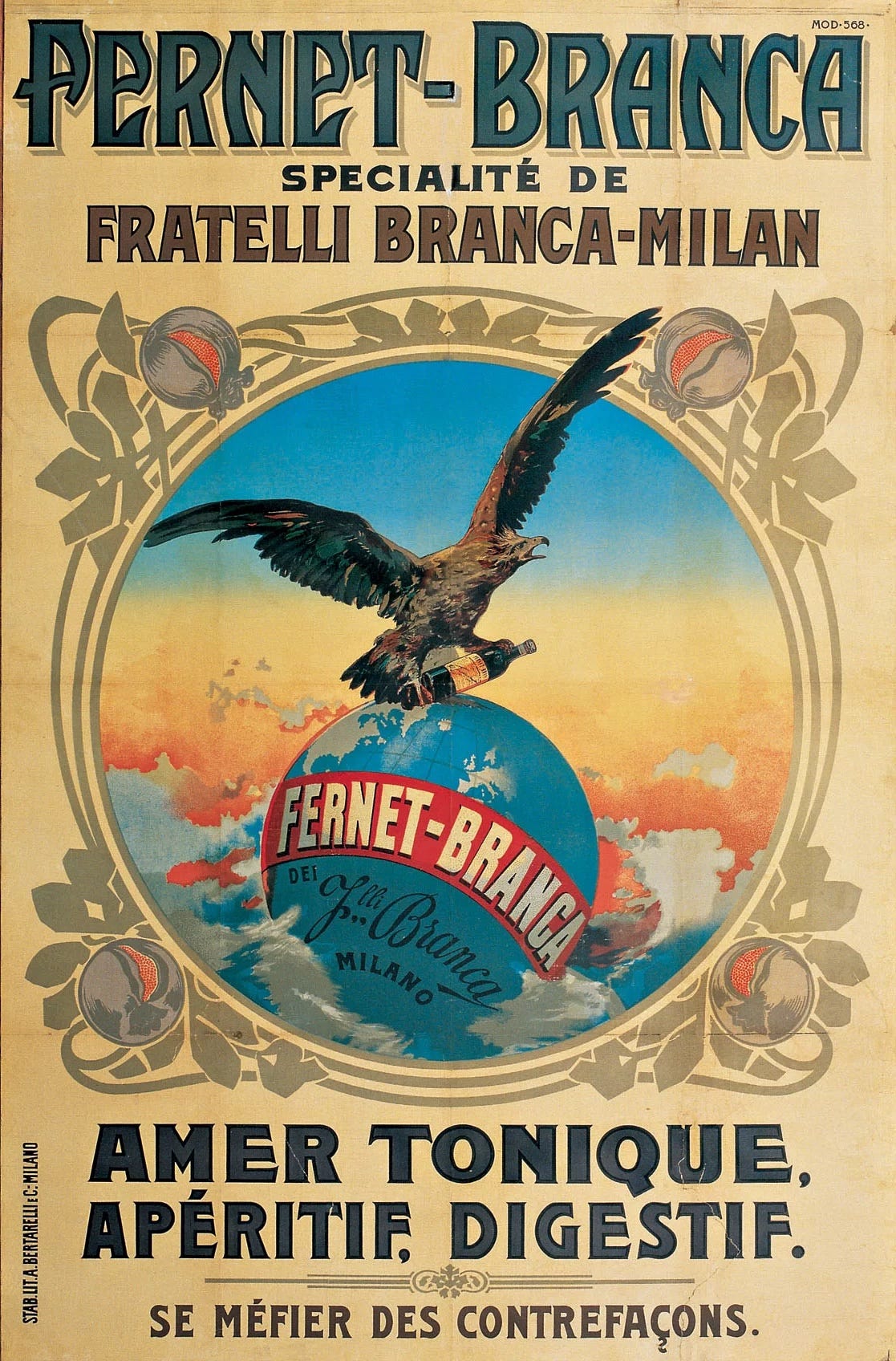
Our Lord refused to drink from that bitter cup he was offered on the cross, and if you decline to drink fernet today, I won’t blame you (much). It’s an acquired taste, and not one that everyone chooses to acquire. That said, I hope that if you don’t like it on first acquaintance, you won’t write it off entirely.
The two cocktails on offer today are introductory Fernet Branca drinks, and especially with the first one, you can modify the proportions to your own tolerance levels. You can easily reduce the Fernet Branca to one ounce.
This video is a helpful visual guide for how to go about pouring this drink…
But with all those disclaimers aside, I truly think this is a delicious and refreshing drink. My husband really loves it and suggested that we should move to Argentina after it was served to him.
Fernet & Coke
2 ounces Fernet Branca
6 ounces Coca-Cola (Mexi-Coke preferred, but an American can will do)
1 lime wedge (optional)
Build in pilsner/beer glass with ice. Add 3/4 of the Fernet. Add 3/4 of the Coke. Stir. Top off with the rest of the Coke. Add the last 1/4 of the Fernet. Garnish with a lime wedge if desired.


The Hanky Panky was invented by Ada Coleman, oft-called the first female head bartender at The Savoy Hotel’s famous American Bar—though according to Wikipedia, there was another female bartender there at the time. Ada became famous, and Ruth Burgess did not. Slight Mary and Martha vibes, anyone? Anyway, I’m going to shamelessly quote from Wikipedia here:
Coleman was promoted to head bartender of the American Bar at the Savoy Hotel in 1903.[5] Though Coleman is sometimes cited as the first and only female head bartender at the Savoy,[6] there was already another woman tending bar, Ruth Burgess, known as "Miss B" or "Kitty", who started in 1902. Newspaper accounts say they were equally popular with customers, but it was Coleman who was interviewed when she retired and who later found her way into 20th and 21st century histories of cocktails and bartending. One account says the two women worked separate shifts for 20 years without speaking to one another because Coleman had refused to give Burgess the recipes for her popular drinks.[7][8]
American bars, and the diverse cocktails they served, had become popular in England in the late 19th century, and were a selling point for any establishment that had them during Coleman's era.[9] Coleman quickly developed a reputation for being a talented bartender and consummate hostess to the notable and affluent clientele of the Savoy. The Earl of Lonsdale wrote that "she was so nice and so kind and so full of life and energy."[10] Other clients who drank at Coleman's bar included Mark Twain, Marlene Dietrich, Charlie Chaplin, Diamond Jim Brady and the Prince of Wales.[4] "Coley," as her customers nicknamed her, was an "impresario" behind the bar, according to cocktail historian Ted Hughes. "Not only was Coley...a woman in the world of male bartenders," he said, "it was she who made the bar famous."[11]
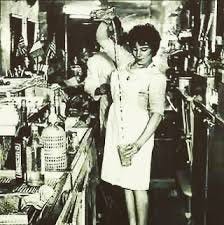
Coley was known as a mixologist who enjoyed creating new drinks. Charles Hawtrey, a comedic actor, and, according to Coley, "one of the best judges of cocktails that I knew," used to come into the bar and say, "Coley, I am tired. Give me something with a bit of punch in it." Coleman recalled.
"It was for him that I spent hours experimenting until I had invented a new cocktail," she said. "The next time he came in, I told him I had a new drink for him. He sipped it, and, draining the glass, he said 'By Jove! This is the real hanky-panky!"[4]
The name hanky panky, which in England meant at that time 'magic', or 'witchcraft' stuck with the drink, a combination of gin, vermouth and Fernet Branca, which is still served in the American Bar at the Savoy today, as well as listed in cocktail manuals.[4]
The Hanky Panky is a riff on a Martinez (a kind of cross between a Martini and a Manhattan), but you could also think of it as a gentle Negroni, having all the components (gin, vermouth, amaro). This all makes it a *perfect* summer drink, and we are finally in the summer months, so it is fitting.
Since she and Ruth slung Fernet behind the Savoy Hotel bar for more than 20 years, one could say that they both were a sort of secular “myrrh-bearing women,” eh?
The Hanky Panky
1 ½ ounces gin
1 ½ ounces sweet vermouth
1 dash [about half a teaspoon] Fernet Branca
1 dash orange bitters, optional
1 orange twist
Add gin, vermouth, Fernet Branca, and orange bitters (if using) to a cocktail mixing glass. Fill 2/3rds full with ice and stir briskly until very cold, 15-30 seconds.
Strain the mixture into a chilled cocktail glass and express the oil of one orange twist (or peel) into the drink. Serve.
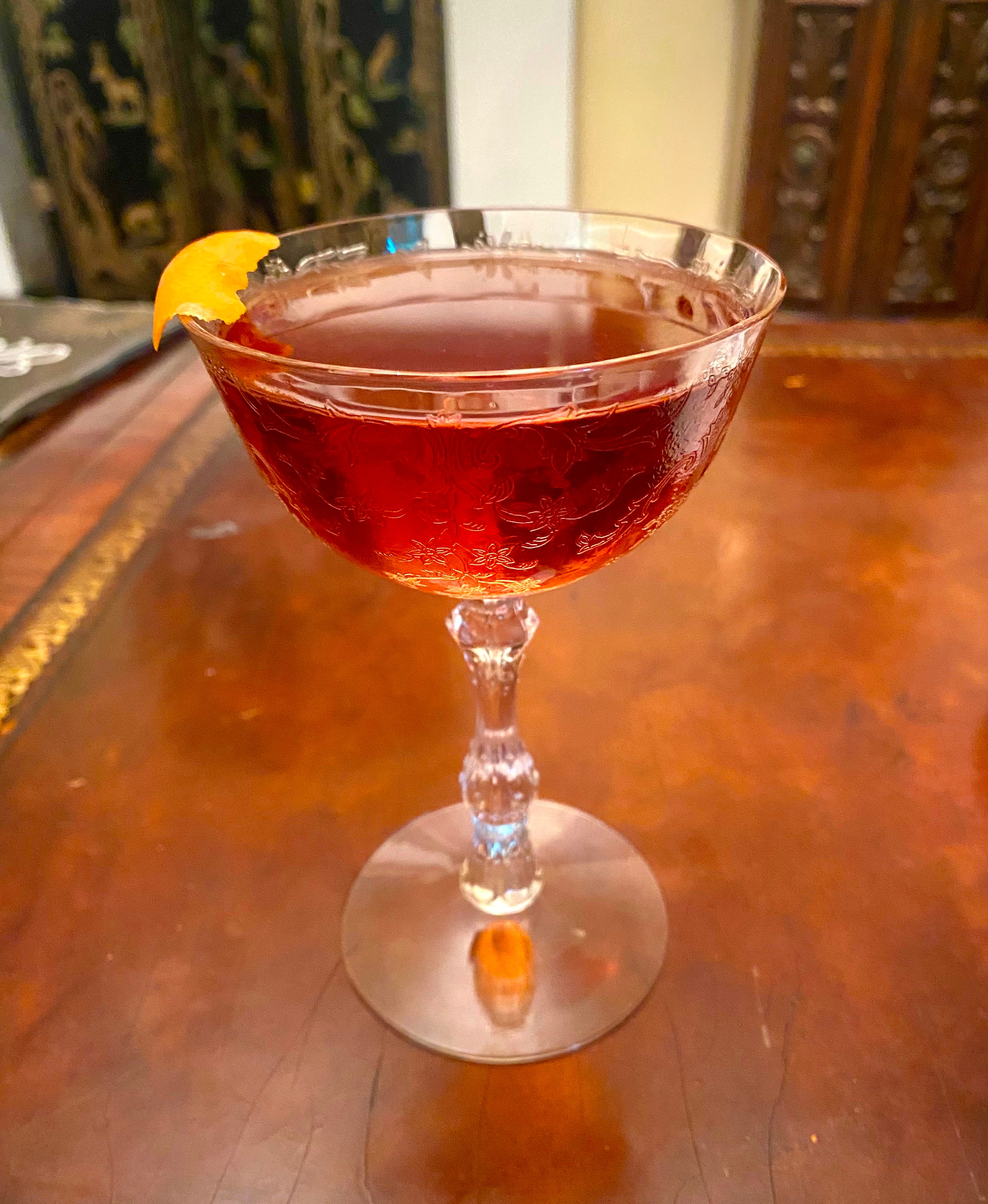
May the myrrh you drink be to your health and holiness.
Saints Mary and Martha, Myrrh-bearers, pray for us!
If you enjoyed this post, you can contribute to the Habighorst home bar’s Fernet Fund in my virtual tip jar: https://buymeacoffee.com/orthodoxtable
I wish I knew about this drink before now. Liquor stores closed here on Sundays.